IS BASS RUINING YOUR ROOM?
Low-frequency problems are the biggest challenge in any studio or listening room. Standing waves, room modes, and boomy bass distort what you hear – no matter how good your monitors are, no matter how carefully you mix. The problem isn’t your equipment. It’s your room.
The PSI Audio AVAA is a revolutionary active bass absorber (active bass trap) that physically eliminates room modes between 15–160 Hz.
There is nothing to calibrate. No special knowledge required. Plug it in, place it in the room, and hear the difference immediately
What are Room Modes – and Why Do They Matter?
Every room has a resonant frequency determined by its dimensions. When a sound wave’s wavelength matches the distance between two parallel surfaces, energy builds up at that frequency and causes a standing wave – a room mode. The result is that some bass frequencies become unnaturally loud in certain listening positions, while others virtually disappear.
If you’ve ever walked around a room while music plays and noticed the bass sounding radically different in different spots, you’ve experienced room modes firsthand. In a studio, they make it almost impossible to make reliable low-end decisions. You might cut the bass in your mix only to find it sounds heavy everywhere else. You might boost it trying to compensate – and make the problem worse.
Why passive bass traps aren’t enough
Traditional bass traps absorb sound energy through friction and heat conversion. To be effective at low frequencies, a passive absorber needs to be physically thick – often 30 cm or more – and cover large areas of your room. Even then, a passive panel treats the surface where it is placed. It does not eliminate the standing wave at its source.
The physics are simple and unforgiving: to absorb a 50 Hz wave with a passive panel, you need an absorber approaching a quarter-wavelength in depth. That’s 1.7 metres. No studio has that kind of space to spare.
How AVAA Technology Works
The PSI Audio AVAA (Active Velocity Acoustic Absorber) takes a fundamentally different approach. Rather than trying to absorb sound energy after it has built up, the AVAA imposes an acoustic impedance on the air in front of the device. In practical terms, it acts like a hole in the wall – a perfect low-frequency absorber that doesn’t exist in passive reality.
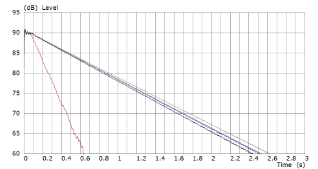
The AVAA detects the pressure variations caused by room modes and responds in real time, well within the 0.2 millisecond threshold at which any acoustic effect would be audible. The result is a measurable, immediate reduction in room mode resonance – without touching your speaker placement, your mix, or anything else in your signal chain.
Key technical advantages
- Active absorption is up to 45 times more effective than a passive absorber of equivalent size
- Effective across the most problematic frequency range: 15 Hz to 160 Hz
- No calibration needed – place it at a pressure maximum in your room and it works
- Works with any speaker system and any room geometry
Immediate, measurable improvement – visible in acoustic measurement software
THE PRODUCTS
PSI Audio offers two active bass traps: the AVAA C20 and the AVAA C214. Both share the same fundamental AVAA technology and deliver the same core performance. The difference is in their technology, form factor, and level of control.
AVAA C20 – Analog Active Bass Trap
The C20 is where it all started. Launched in 2016, the AVAA C20 has quietly become the secret weapon of acoustic treatment in studios, listening rooms, and broadcast facilities worldwide. Its analog circuit design is proven over thousands of installations. It is unique, easy to move, and requires no calibration whatsoever.
- Frequency range: 15 Hz – 150 Hz
- Up to 50% reduction in room mode resonance time per unit
- Equivalent passive absorption: 35 times its physical size
- Analog technology – robust, simple, time-tested
- Handmade in Switzerland
AVAA C214 – Digital Active Bass Trap
In 2023, PSI Audio reimagined the AVAA from the ground up using digital signal processing. The result is the C214: lighter, more compact, and controllable via app – while delivering even greater absorption efficiency. The C214 won Stereophile magazine’s Products of 2025 Editors’ Choice Award.
- Frequency range: 15 Hz – 160 Hz
- Up to 50% reduction in room mode resonance time per unit
- Equivalent passive absorption: 45 times its physical size
- Digital DSP technology – latency below 0.2 ms
- App-controllable sensitivity
- Aluminium housing – lighter (11 kg) and more compact than C20
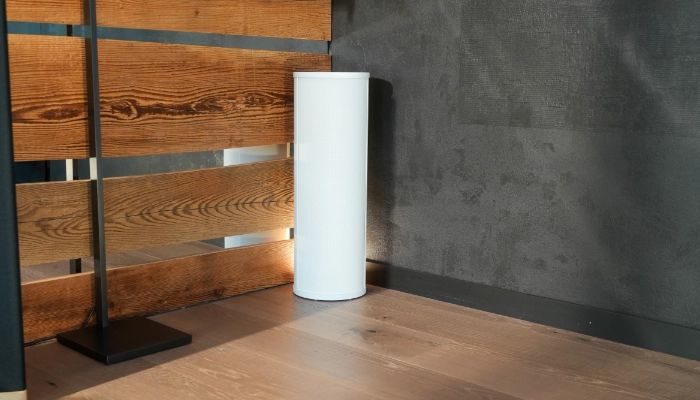
- Available in black or white
- Swissmade
AVAA C20 vs AVAA C214: Side by Side
| Product | AVAA C20 | AVAA C214 |
|---|---|---|
| Freq. range | 15 – 150 Hz | 15 – 160 Hz |
| Efficiency | 25x its size | 45x its size |
| Active surface | 0.2m2 | 0.13m2 |
| Surface efficiency | 5m2 | 5.85m2 |
| Technology | Analog | Digital |
| Housing | MDF | Aluminium |
| Dimensions (mm) | 424x509x300 | diam. 210×640 |
| Weight (kg) | 13 | 11 |
AVAA C20 and C214 use ACTIVE TECHNOLOGY to fight room modes
Who Uses AVAA – and Why
The AVAA has been adopted across a remarkable range of applications. Its core appeal is the same everywhere: a room mode problem that previously required either massive passive treatment or acoustic compromise can now be solved with one or two compact units.
Recording and mixing studios
Accurate bass reproduction is non-negotiable in a professional studio. The AVAA gives engineers the confidence to make low-end decisions that translate correctly outside the room – to streaming platforms, cars, headphones, and consumer systems. Many studios report that once they install an AVAA, it becomes one of the most important tools in the room.
Home studios
Home studios are typically the most acoustically problematic environments – small rooms with parallel walls, low ceilings, and little space for passive treatment. The AVAA is often the only practical solution. Where stacking broadband absorbers into corners might help with mid-frequency reflections, the AVAA addresses the fundamental low-frequency problem that those panels cannot touch.
Hi-fi and audiophile listening rooms
The AVAA is increasingly adopted by serious audiophiles who want to hear their systems as the recording engineer intended. Bass smear, one-note bass, and muddy low-end are almost always room problems, not system problems. The AVAA solves them at source.
Broadcast and post-production
In broadcast facilities and post-production suites, dialogue clarity and music bed balance both depend on accurate bass monitoring. Broadcast-standard rooms that have used the AVAA report greater consistency between monitoring positions and more reliable translation to broadcast chain outputs.
What users say
“My system has moved from an A grade to an A+++ grade with the addition of three AVAA traps. I’ve never had such even, impacting, punchy, and clear bass. Measurements confirm that three AVAA traps are more effective than six 6-inch thick passive traps – and without the overdamping problems that passive traps have.”
– Bob Katz, mastering engineer (as featured in Stereophile)
“The AVAA Active Bass Traps are also amazing. They bring the low end into focus in ways you didn’t think were possible until you hear it in person. No acoustical measurements or calibration required, just use your ears.”
– Justin Perkins, Mystery Room Mastering (AVAA C20 user)
“This is the most interesting and impressive new audio technology I’ve seen in years. It’s as simple as it gets to set up and it just works like it says it will.”
– Warren Sokol, United Mastering
“Records I once avoided because the bass just overwhelmed the room are now controlled. The sounds from bass to mid band became clearer like I had upgraded my system with better speakers or electronics. A more powerful change than I could have imagined.”
– Robert Hart, audiophile (AVAA user review, hi-fi perspective)
Why Active Bass Traps Outperform Passive Treatment
The comparison between active and passive bass treatment often confuses buyers – particularly because many acoustic panels are marketed with impressive-sounding specifications. Here is what the numbers actually mean in practice.
Size vs performance
A passive panel 10 cm thick at 100 Hz has a theoretical absorption coefficient that sounds meaningful – until you do the maths and realise you need dozens of square metres of it to make a meaningful dent in a standing wave. A single AVAA C214 provides the equivalent absorption area of a passive absorber 45 times its size. In a typical studio, two C214s will outperform more passive treatment than most rooms can physically accommodate.
“Measurements confirm that three AVAA traps are more effective than six 6-inch thick passive traps — and without the overdamping problems that passive traps have. Unlike the AVAA, passive traps have very little effect at extreme low frequencies and adversely affect the clarity and impact of the midrange and high frequencies.”
– Bob Katz, mastering engineer (Stereophile)
Targeting the right frequency range
Passive absorbers are most effective at mid and high frequencies. Their effectiveness drops sharply below 200 Hz – exactly the range where room modes cause the most audible damage. The AVAA operates from 15 Hz to 160 Hz: precisely the critical range where passive treatment struggles most.
Immediate results, no guesswork
Passive treatment requires careful measurement, placement trials, and often significant room modification. The AVAA follows a straightforward principle: place it at or near a pressure maximum in your room (typically a corner) and it works. No measurement microphone, no acoustic simulation, no iteration required. You can verify the result with a measurement app, but you will hear it immediately.
- Physically reduces room modes up to about 50% per unit
- No calibration needed, no latency
- Works in any room, with any speaker setup
- Effective in the most critical range: 15–160 Hz
- Immediate and measurable improvement
The AVAA Technology
The AVAA principle was developed by PSI Audio engineers in response to a simple observation: the passive acoustic treatment available for low frequencies was fundamentally inadequate for the demands of professional monitoring. The first AVAA – the analog C20 – launched in 2016 and immediately attracted attention from acoustic engineers and studio designers worldwide.
In 2023, PSI Audio introduced the C214, applying digital signal processing to the AVAA concept for the first time. The engineering challenge was significant: DSP introduces latency, and any delay longer than 0.2 milliseconds would make the device’s correction audible. PSI Audio’s engineers solved this, delivering a digital AVAA with latency comfortably within the inaudible threshold.
The AVAA does not use phase cancellation. It does not introduce any signal into your room. It physically changes the acoustic impedance at the point of installation – absorbing the energy of the room mode as it builds, before it can establish a standing wave.
Frequently Asked Questions (FAQ)
Most rooms benefit from one AVAA per significant room mode. A typical rectangular studio will have three primary axial modes – one for each room dimension. Starting with two AVAAs and measuring the result is a practical approach. Your dealer can advise based on your room dimensions.
Yes. The AVAA treats the room itself, not the speakers. It is completely independent of your monitoring chain, and compatible with any speaker system, amplifier, or digital-to-analogue converter.
Both use the same AVAA principle. The C20 uses analog circuitry and has been in production since 2016. The C214 uses digital DSP, is lighter and more compact, adds app control, and covers a slightly wider frequency range (up to 160 Hz vs 150 Hz for the C20). If you want the proven analog design, choose the C20. If you want maximum precision and digital control, choose the C214.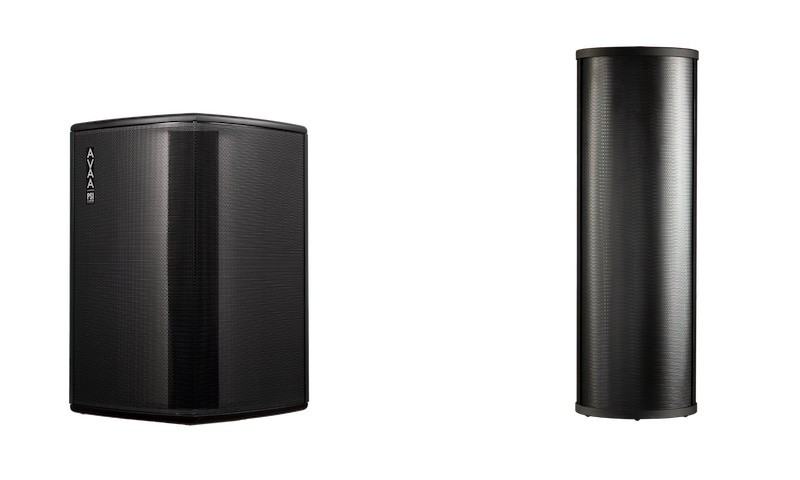
Yes. There is an optional mounting feet that allow it to be installed on a wall, ceiling, or floor – horizontally or vertically. This gives full flexibility in rooms where floor placement is impractical.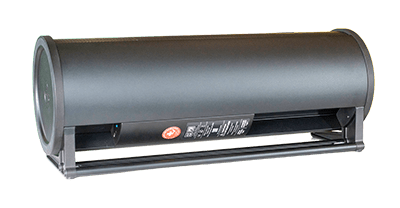
#avaatechnology